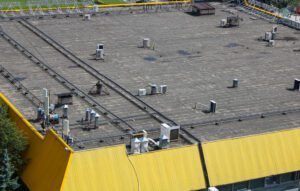


Commercial roofs take on a lot during winter, especially here in places like Naperville, Illinois, where cold snaps, snow, and ice settle in for months. Even a roof that looked fine last fall can run into problems during December and January. Some issues show up fast, while others build slowly and do not make themselves known until water starts dripping inside.
We talk with many property managers who do not see signs of trouble until things go from small to serious. That is why learning to spot early signs of damage is one of the best ways to prevent long-term problems. When you know what to look for, dealing with commercial roof repair becomes more about planning than reacting.
How to Spot Trouble from the Ground
You do not always need to climb up to know something is wrong with the roof. A quick walk around the building can offer some hints if you know what to watch for.
- Look for uneven parts of the roofline. If it looks saggy or uneven from the parking lot, that is a red flag.
- Water that pools close to the building or is not draining right might be linked to something going on up top.
- Inside the building, check for stains on the ceiling, peeling paint, or signs of mold. These usually show up after the roof has already been leaking for a while.
- A roof problem might also show up as a change in air flow. New drafts, cold spots, or climbing heating bills could mean the building envelope is not sealing like it should.
Some signs are easy to miss until someone points them out. That is why even small changes in how the building feels or looks are worth taking seriously.
Winter-Specific Signs to Watch For
Winter brings its own set of challenges for commercial roofs, especially in areas like Naperville where weather can swing fast.
- After snow builds up, thaw and freeze cycles can create ice dams. These are thick ridges of ice at the roof’s edge or around drains. Water pools behind them and often pushes into places it should not.
- If drains and scuppers get blocked by snow or ice, water can back up onto the roof instead of flowing away.
- As temperatures drop and rise, roofing materials can expand and shrink. That movement weakens seams and flashing over time and may lead to gaps.
- Snow that sticks too long can hide damage. A small puncture or soft spot might not show until the snow melts and a stain appears inside the building.
Winter is not just about what is on the roof, it is about what gets trapped there. The longer it stays, the more pressure it puts on the whole system.
What a Close-Up Inspection Might Reveal
While ground checks are helpful, nothing beats getting a closer look when it is safe to do so. Some roof issues stay hidden until you are up near them.
- Cracked or brittle flashing is one of the most common problems we find, especially around commercial vents or HVAC units. These cracks can let water settle under the membrane where it stays invisible.
- Torn sections near seams or edges show where materials are loosening. Once seams separate, leaks often follow.
- Debris or snow piled in corners could be blocking drainage paths, causing slow leaks over time.
- Any pooling water or soft spots underfoot tell us something below the surface might have given out.
If any of these problems turn up during an inspection, it is usually a good time to consider commercial roof repair before the damage grows. Acting fast keeps things from spreading and saves time down the road.
The Risks of Waiting Too Long
Delaying roof repairs often feels easier in winter when inspections or maintenance feel more complicated. But that delay can cost more than people realize.
- A minor puncture can turn into a full leak in a matter of weeks. Once water gets past the upper layer, it can weaken insulation or framing underneath.
- Small leaks also tend to spread. Water finds its way into new parts of the roof deck, making repairs harder and messier.
- Damage from earlier storms can get worse as temperatures drop, then worsen again when things thaw.
- If repairs wait too long, the problem often becomes clear in early spring, right when other property needs demand attention. Starting early gives you more control.
Waiting rarely makes things easier. In winter, that delay means another freeze, another melt, another chance for damage to go deeper.
Spot the Signs Before Damage Piles Up
Catching roof problems early really comes down to paying attention. You do not have to know every detail about roofing materials to notice when something does not seem right.
Small changes inside or around the building can say a lot. Water near the walls, stains showing up indoors, or areas where snow always seems to stick can be signs it is time for a closer look. And when things do not seem the same from season to season, it is usually worth checking out.
Why Commercial Roof Care Matters in Naperville
We provide commercial roof repairs, replacement, and maintenance throughout Naperville, Illinois, and the nearby Chicago suburbs. Our team specializes in flat and low-slope roofing systems and handles everything from leak detection to major storm restoration. Professional roof care not only fixes today’s problems but also helps extend the life of your commercial property.
Keeping a commercial building in good shape takes more than just waiting for an obvious leak. When we stay alert to these quiet signs of trouble, we give ourselves a better chance to fix problems early before the snow melts and the damage grows deeper.
Schedule a Winter Commercial Roof Check
Staying proactive about roof maintenance is key to protecting your property in Naperville, IL, especially during the winter months. We often uncover hidden issues during inspections that are not visible from the ground, particularly after extended periods of cold weather. For peace of mind and reliable solutions, schedule a commercial roof repair consultation with Modern Roof Systems today.